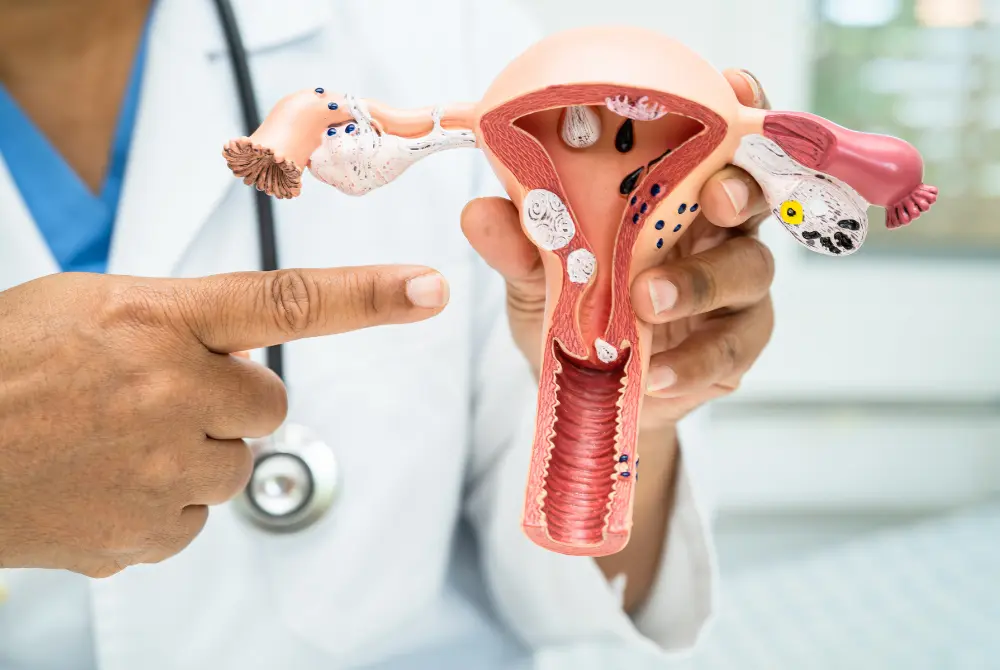

Endometriosis and adenomyosis are two of the most commonly confused conditions in women’s reproductive health. Both cause pelvic pain and heavy periods. Both are frequently misdiagnosed or dismissed. And both can have a significant impact on your ability to conceive.
But the way each condition affects fertility is different – and understanding that difference is critical to getting the right fertility assessment, the right treatment, and the best possible chance of achieving your family goals.
Many women we see at Create Fertility tell us they’ve been trying to conceive for years without success, often while dealing with painful periods, heavy bleeding, or ongoing pelvic pain. Many arrive feeling frustrated after multiple appointments or being told everything looks normal, only to later discover that endometriosis or adenomyosis may be affecting their fertility.
This article is written specifically for women in Melbourne who want to understand the fertility implications of endometriosis vs adenomyosis: how each condition affects conception, what the testing options are, and what fertility treatment looks like for each.
Endometriosis vs Adenomyosis in Melbourne: Understanding the Difference
Before exploring the fertility implications of each, it is worth understanding the core difference between endometriosis and adenomyosis.
Endometriosis
Endometriosis occurs when tissue similar to the uterine lining grows outside the uterus, most commonly on the ovaries and pelvic lining. Each month this tissue bleeds and inflames with nowhere to exit, progressively causing scarring, adhesions, and ovarian cysts known as endometriomas.
Adenomyosis
Adenomyosis occurs when the same type of uterine lining tissue grows into the muscular wall of the uterus itself. The uterus becomes enlarged and thickened, with each cycle causing bleeding and inflammation from within the muscle. Unlike endometriosis, adenomyosis is contained entirely within the uterus.
Both conditions can cause painful periods, pelvic pain, and heavy bleeding. Both can occur independently or together – research suggests up to 20% of women with endometriosis also have adenomyosis. And both can affect fertility, although through distinctly different mechanisms.
How Endometriosis Affects Fertility
Endometriosis affects fertility through multiple overlapping mechanisms, which is one reason its impact on conception can be difficult to predict without individual specialist assessment.
- Reduced ovarian reserve: Ovarian endometriomas – cysts caused by endometriosis on the ovaries – directly damage the surrounding ovarian tissue over time, reducing the number of eggs available. Women with endometriomas typically have lower AMH levels and antral follicle counts compared to women without the condition. This is one of the most significant fertility implications of endometriosis and a key reason early assessment is important.
- Distorted pelvic anatomy: Scarring and adhesions caused by endometriosis can physically alter the position of the ovaries and fallopian tubes, obstructing the natural path of eggs and sperm and reducing the probability of natural fertilisation.
- Impaired egg quality: The chronic inflammatory environment created by endometriosis has been shown to negatively affect egg quality – both the eggs available for natural conception and those retrieved during IVF. Tailored IVF protocols that account for this are essential for women with endometriosis.
- Blocked fallopian tubes: In severe cases, endometriosis-related scarring can cause complete tubal blockage, preventing natural fertilisation entirely and making IVF the most appropriate pathway.
- Impaired implantation: Endometriosis alters the hormonal and immunological environment of the uterus, potentially making it harder for a fertilised embryo to implant successfully – a factor relevant both to natural conception and to IVF embryo transfer outcomes.
How Adenomyosis Affects Fertility
Adenomyosis affects fertility primarily through its impact on the uterine environment rather than the ovaries or fallopian tubes. This makes its fertility implications distinct from endometriosis – and it is why the two conditions require different considerations in fertility treatment planning.
- Impaired embryo implantation: The most significant fertility impact of adenomyosis is on implantation. The structural and inflammatory changes adenomyosis causes within the uterine wall alter the receptivity of the endometrium – making it harder for an embryo to successfully embed. This affects both natural conception and IVF embryo transfer success rates.
- Altered uterine contractility: Adenomyosis changes the way the uterine muscle contracts, which can impair the movement of sperm through the uterus toward the fallopian tubes and may also affect embryo transport after fertilisation.
- Hormonal disruption: The inflammatory environment of adenomyosis can disrupt the hormonal signals that regulate the menstrual cycle and support early pregnancy, further reducing the monthly probability of successful conception.
- Ovarian reserve is typically preserved: Unlike endometriosis, adenomyosis does not typically damage the ovaries or reduce ovarian reserve directly. This means AMH levels and antral follicle counts are usually within normal range for women with adenomyosis alone – the fertility challenge is primarily in the uterine environment rather than egg supply.
For women with adenomyosis who are trying to conceive or considering IVF, the focus of specialist assessment shifts from ovarian reserve to uterine receptivity and the optimisation of the uterine environment ahead of embryo transfer.
Fertility Impact of Endometriosis vs Adenomyosis: Key Differences
Understanding the difference in how each condition affects fertility helps clarify what your specialist needs to assess and what your treatment options are.
Where the fertility impact is felt
Endometriosis primarily affects the ovaries, fallopian tubes, and pelvic environment. Adenomyosis primarily affects the uterus and the implantation environment. When both conditions are present together, fertility can be impacted across all of these areas simultaneously.
Ovarian reserve
Women with endometriosis, particularly those with ovarian endometriomas, may have reduced ovarian reserve. Women with adenomyosis alone typically have a normal ovarian reserve. An AMH blood test and antral follicle count may help clarify your individual position.
IVF implications
For women with endometriosis, IVF protocols need to account for potential reduced ovarian response and the inflammatory pelvic environment. For women with adenomyosis, the focus shifts to optimising the uterine environment for embryo transfer, which may include hormonal preparation, surgical assessment, or the use of a frozen embryo transfer cycle rather than a fresh transfer.
When both conditions are present
Women with both endometriosis and adenomyosis may face fertility challenges on multiple fronts. This group benefits most from a thorough specialist assessment that evaluates both ovarian reserve and uterine receptivity before any treatment decisions are made.
Whether you have a confirmed diagnosis of endometriosis, adenomyosis, or both, a specialist fertility assessment gives you a clear picture of exactly where your reproductive health stands – and what your options are.
At Create Fertility, a fertility assessment for women with these conditions may include:
- AMH blood test: Measures your ovarian reserve. Particularly important for women with endometriosis or ovarian endometriomas where egg supply may be reduced.
- Antral follicle count (AFC) via ultrasound: A direct count of visible follicles in the ovaries, giving a real-time picture of your ovarian function.
- Transvaginal ultrasound: Assesses the ovaries for endometriomas and the uterine wall for adenomyosis-related changes including enlargement and myometrial thickening.
- MRI: Provides detailed imaging of both conditions, particularly useful for complex or deep infiltrating endometriosis or to confirm adenomyosis when ultrasound findings are inconclusive.
- Hormonal blood panel: FSH, LH, oestradiol, and progesterone to assess ovarian function and hormonal environment.
You do not need to be actively trying to conceive to book a fertility assessment. Many women with endometriosis or adenomyosis choose to understand their fertility picture years before they plan to start a family – and that early knowledge consistently leads to better outcomes.
Fertility Treatment Options for Endometriosis and Adenomyosis in Melbourne
The right fertility treatment depends on which condition you have, how severe it is, your ovarian reserve, your age, and your fertility goals. Here is how treatment approaches differ between the two conditions.
Fertility treatment for endometriosis
Treatment options range from natural conception with ovulation tracking, to ovulation induction, IUI, and IVF. For women with reduced ovarian reserve or blocked tubes, IVF is frequently the most appropriate pathway. IVF protocols for women with endometriosis are tailored to account for reduced ovarian response and the inflammatory environment. Surgery to remove endometriomas or lesions may be considered before IVF in some cases, carefully weighed against the risk to ovarian reserve.
Fertility treatment for adenomyosis
Women with adenomyosis who are trying to conceive may benefit from hormonal preparation of the uterine lining ahead of embryo transfer. Frozen embryo transfer (FET) cycles are often preferred over fresh transfers for women with adenomyosis, as they allow more precise preparation of the uterine environment. Medical suppression of adenomyosis with GnRH agonists before a transfer cycle is also used in some cases to improve implantation outcomes.
When both conditions are present
Treatment planning for women with both endometriosis and adenomyosis is more complex, and benefits from a collaborative approach between fertility specialists and gynaecologists experienced in both conditions. At Create Fertility, our specialists work alongside the gynaecology team to ensure every aspect of your reproductive health is addressed before and during treatment.
Frequently Asked Questions: Endometriosis vs Adenomyosis and Fertility
Does adenomyosis affect fertility the same way as endometriosis?
No. Endometriosis primarily affects fertility through reduced ovarian reserve, distorted pelvic anatomy, and impaired egg quality. Adenomyosis primarily affects fertility through impaired uterine receptivity and embryo implantation. Ovarian reserve is typically preserved in women with adenomyosis alone, while the uterine environment is the main area of concern. Both conditions require different assessment and treatment strategies.
Can adenomyosis make IVF less successful?
Adenomyosis can reduce implantation rates in IVF because it alters the uterine environment. However, fertility specialists often adjust treatment protocols to improve outcomes. Strategies such as hormonal suppression before embryo transfer or frozen embryo transfer cycles can help optimise implantation conditions.
Should I have surgery for endometriosis or adenomyosis before IVF?
This depends on your specific diagnosis. For endometriosis, surgery to remove ovarian endometriomas may improve egg access during retrieval but must be carefully weighed against the risk of reducing ovarian reserve. For adenomyosis, surgery is rarely recommended before IVF as there is no equivalent excision procedure and the risks generally outweigh the benefits. Your fertility specialist and gynaecologist will make this recommendation collaboratively based on your full picture.
Can I get pregnant naturally if I have both endometriosis and adenomyosis?
Yes, natural conception is possible with both conditions, particularly for women with mild to moderate endometriosis and good ovarian reserve. However, having both conditions simultaneously does reduce the monthly probability of natural conception more significantly than either condition alone. Early specialist assessment gives you the clearest picture of where your fertility stands and what your most effective path forward is.
Is it harder to conceive with adenomyosis?
Adenomyosis can affect the uterus and make conception a bit more challenging, but with the right assessment and care, many women can still achieve pregnancy successfully.
Endometriosis and Adenomyosis Fertility Care at Create Fertility Melbourne
At Create Fertility, we understand that navigating the fertility implications of endometriosis and adenomyosis – separately or together – is one of the most complex and emotionally demanding journeys a woman can face.
Our fertility specialists in Melbourne have extensive experience working with women affected by both conditions, designing IVF protocols and fertility treatment plans that account for the specific reproductive challenges each condition presents. We are owned and operated by fertility specialists, which means every recommendation is made by doctors who are personally invested in your outcome.
As a specialist fertility clinic in Melbourne, Create Fertility offers:
- Dedicated fertility consultations for women with endometriosis and adenomyosis
- Comprehensive female fertility testing including AMH, AFC ultrasound, and pelvic ultrasound assessment
- Tailored IVF protocols for endometriosis including endometrioma management and reduced ovarian reserve
- Frozen embryo transfer cycles optimised for women with adenomyosis
- Integrated care with the Create Health gynaecology and endometriosis surgery team
- Fertility preservation through egg freezing for women who want to act before disease progresses
- Transparent costs and Medicare rebate guidance from your first appointment