
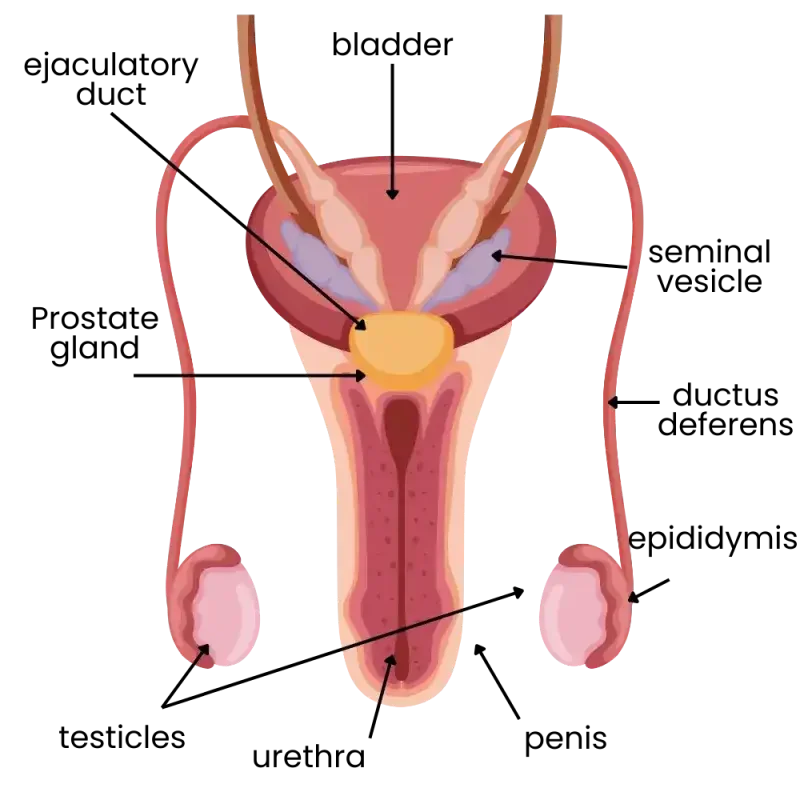
It’s important to note that not all semen contains sperm. Semen is produced in the seminal vesicle and, while being important to the reproductive system, does not contain reproductive properties on its own. It’s the sperm’s job to fertilise and reproduce.
Semen is the white fluid that ejaculates out of the penis. Sperm, the male reproductive cell, mixes with the semen before ejaculation. If there are no mature sperm in the pelvic cavity when ejaculating, then that ejaculate has no reproductive cells for fertilisation.
Most male factor infertility problems are related to sperm health, including challenges in sperm quality or sperm quantity or disruption to sperm ejaculation.

Normal sperm count densities range from 15 million to greater than 200 million sperm per millilitre of semen. You are considered to have a low sperm count if you have fewer than 15 million sperm per millilitre or less than 39 million sperm total per ejaculate.

Sperm morphology — the size and shape of sperm — is one factor that's examined as part of a semen analysis to evaluate male infertility. Sperm morphology results are reported as the percentage of sperm that appear normal when semen is viewed under a microscope.

To reach and fertilise an egg, sperm must move — wriggling and swimming through a female cervix, uterus and fallopian tubes. This is known as motility. Pregnancy is possible with less than 40% of the sperm in ejaculate moving, but 40% is considered the threshold. The more, the better.
Simple tests such as a semen analysis can help find the cause of male fertility problems.
In many cases, male infertility can be overcome with lifestyle changes, medical treatments or with the help of fertility treatments such as IVF. For the best chance of conceiving, early investigations into fertility problems are key.
About 30% of infertility cases in Australia are due to problems with male fertility, while a further 30% are traced to problems with both the male and female. Male infertility affects a number of Australian men – 1 in 20 men has low sperm levels, while 1 in every 100 men has no sperm at all.
There are several potential causes of male infertility.

From 35, men are roughly half as fertile as they were at 25. Their fertility decreases dramatically from the age of 55.

Around two-thirds of infertile men have healthy sperm-production problems, such as low sperm count, complete absence of sperm, abnormally shaped sperm or problems with the way sperm moves.

Along with recreational drug use and smoking or vaping, excessive drinking can affect sperm quality.

Medical or hormonal problems, including chronic medical conditions like diabetes or problems with the levels of male sex hormones in the body.

Sperm that is unable to reach and penetrate the egg could be due to damaged testicles, swollen veins in the scrotum, a blockage or obstruction in the testes, erectile or ejaculation disorders or the presence of sperm antibodies.

Many lifestyle factors need to be taken into consideration, including being overweight, lack of exercise, stress, exposure to chemicals, and excessive heat.

The sperm carries your DNA in its head. Damaged sperm can affect the sperm's ability to function properly.

The most important male infertility test – a semen analysis – measures the number of sperm, their motility (ability to move), their morphology (size and shape), and the volume and consistency of the ejaculated sample.
To conduct the test, you will be asked to give a semen sample; the typical volume of semen collected is around a teaspoonful (2-6 millilitres) of fluid. Less semen would indicate fewer sperm, which would affect male fertility. More semen indicates too much fluid, which would dilute the sperm, also impeding fertility.
Additional tests may be performed if you have an abnormal semen analysis, such as a test for sperm antibodies.
A normal sperm count ranges from 15 million to over 200 million sperm per millilitre of semen. The average for a healthy adult male typically falls between 40 million and 300 million per millilitre. A count below 15 million per millilitre is considered low and warrants a conversation with a fertility specialist.
Approximately 1 in 20 Australian men has clinically low sperm levels, and around 1 in 100 has no sperm at all. Male factors contribute to roughly 50 to 60% of all couples who experience difficulty conceiving, either as the sole cause or as a contributing factor alongside female fertility issues.
No, men do not ovulate. Women release one egg per monthly cycle during ovulation; men produce sperm continuously through a process called spermatogenesis, which takes around 64 to 74 days per cycle. Unlike female fertility, which follows a monthly window, male fertility is ongoing, though it does decline gradually with age.
The most effective natural approaches include maintaining a healthy weight, exercising regularly, quitting smoking, reducing alcohol, managing stress, and eating a diet rich in antioxidants. Because sperm takes around 70 days to mature, sustained lifestyle changes over two to three months are typically needed before improvements show in a semen analysis.
Many men with low sperm counts have no obvious symptoms. The only way to know for certain is through a semen analysis. If you and your partner have been trying to conceive for 12 months without success, or 6 months if you are over 35, a semen analysis is the recommended first step.
Common causes include lifestyle factors such as obesity, smoking, excessive alcohol, and heat exposure, as well as medical conditions including hormonal imbalances, diabetes, and varicocele. Physical blockages in the reproductive tract, DNA fragmentation, and age are also contributing factors. In many cases the cause is treatable, and early investigation gives you the best range of options.
Anyone can struggle with fertility, but it doesn’t have to mean that you won’t be able to fulfil your dreams of creating a family. Our fertility team works to understand the underlying cause of your fertility challenges and discusses this with you in a way you’ll understand. We then work together to develop a personalised treatment plan that works for you.
For more information on male factor infertility in Melbourne or to book an appointment with a fertility specialist at Create Fertility, please contact our friendly team.
We look forward to being part of your fertility journey.

Planning for a baby, or already trying? Learn what can influence your fertility.
Date: Wednesday 19 November 2025
Time: 7:00 PM AEDT
Location: Live via Microsoft Teams
Cost: Free