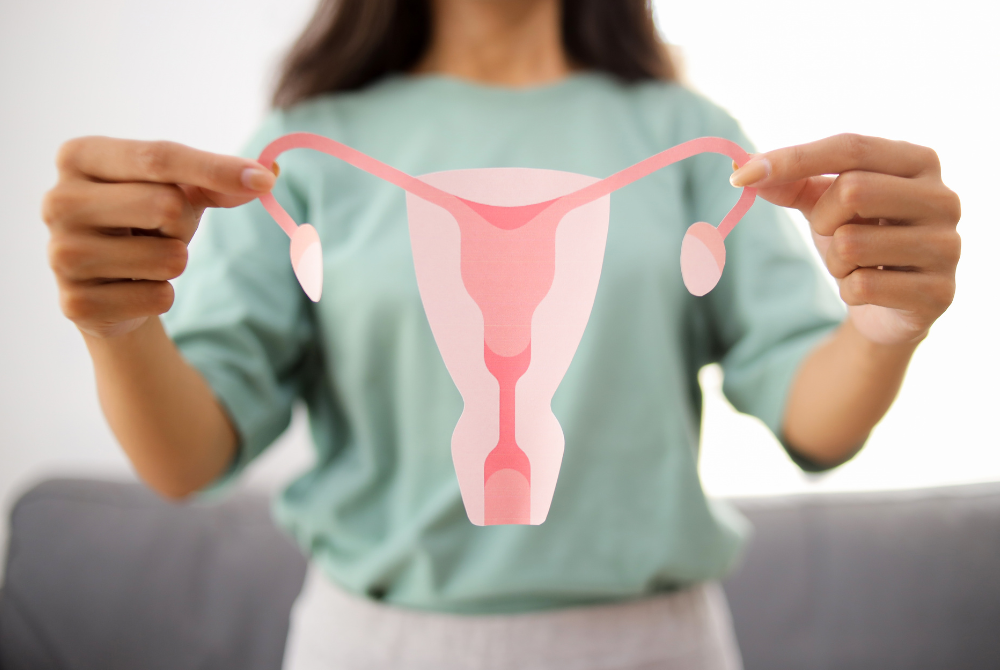

Hysterectomy is one of the most common gynaecological procedures, yet it remains surrounded by persistent myths. These misconceptions often surface in general practice, shaping patient expectations, fueling anxiety and sometimes complicating decision-making.
As a gynaecologist and surgeon at Create Health, I see this all the time. Women arrive with things they’ve read online, been told by well-meaning friends or quietly worried about for months. My role, and the role of every GP involved in their care, is to replace those fears with clinical facts. So, here’s a clinically grounded reframing of the most common myths:
Myth 1: Hysterectomy means menopause
This is the most common concern I hear, and the most important to address first, because it shapes everything else a patient believes about the procedure.
So, let’s be clear about the biology.
Menopause is determined by ovarian function, not the uterus. If the ovaries are conserved during hysterectomy, hormone production continues and menopause does not automatically follow.
If both ovaries are removed at the same time (bilateral oophorectomy), surgical menopause does occur immediately, rather than as the gradual transition of natural menopause.
There is one nuance worth raising here: research consistently shows that women who undergo hysterectomy with ovarian conservation tend to reach menopause 1.9 to 4 years earlier than women who haven’t had the surgery, likely due to some disruption of ovarian blood supply during the procedure.
Whether ovaries are conserved or removed depends on the indication for surgery, the patient’s age, her individual risk profile and her own preferences. This is a conversation that must happen explicitly before surgery, never assumed.
Myth 2: I won’t have any hormones after a hysterectomy
A natural extension of Myth 1, and equally common. Here’s the reassuring reality.
If the ovaries remain, hormone production is completely unaffected. Oestrogen, progesterone and androgens continue to be made as per usual. Many women are genuinely surprised to find that their energy, mood and libido feel entirely unchanged after surgery, because hormonally, very little has changed.
That said, the picture is different when both ovaries are removed.
For women who undergo bilateral oophorectomy, the sudden withdrawal of oestrogen can bring significant symptoms: hot flushes, sleep disturbance, mood changes, vaginal dryness and longer-term implications for bone density and cardiovascular health.
These women are strong candidates for menopausal hormone therapy (MHT), and that conversation should begin well before surgery. I always raise this in my pre-operative consultations.
A useful line in consultation: A hysterectomy removes the uterus, not necessarily the ovaries-so it stops periods, but it doesn’t automatically stop hormones.
Myth 3: Hysterectomy causes weight gain
This one generates a great deal of unnecessary anxiety, and the evidence simply doesn’t support it.
There is no strong causal link between hysterectomy and weight gain. Research consistently shows that weight changes following hysterectomy are primarily related to age, lifestyle, reduced activity during recovery and metabolic factors, not the surgery itself.
The one exception worth noting: if both ovaries are removed and surgical menopause follows, changes in oestrogen can influence body composition over time, particularly fat distribution around the abdomen. But this is a consequence of oestrogen loss, not hysterectomy as a procedure, and it is far from inevitable. MHT can meaningfully mitigate these effects. For women who retain their ovaries, the surgery itself has no direct causal relationship with weight change.
Myth 4: Sex life will be worse after hysterectomy
This is the question patients often find hardest to raise, and it deserves a thoughtful, honest answer.
The research here is genuinely nuanced, and I believe in being honest about that rather than offering false reassurance.
Overall, studies do not show a significant negative change in sexual function following hysterectomy for most women. For women whose primary indication was pelvic pain or painful intercourse, sexual function often improves meaningfully because the pain that was affecting intimacy is gone. For women having surgery primarily for bleeding or prolapse, the changes tend to be more neutral.
Around 10 to 20 percent of women report some difference in sexual experience after hysterectomy, which can include altered sensation or difficulty with orgasm. It’s worth acknowledging that the evidence on whether cervical removal specifically causes these changes is mixed; the most recent meta-analysis found no statistically significant difference between total and subtotal hysterectomy for sexual function overall. This isn’t something I shy away from discussing pre-operatively. A woman who knows what to expect, and has realistic expectations rather than fear-driven assumptions, is far better placed to navigate her recovery with confidence.
And for many of my patients, the outcome is a positive one. Libido is primarily hormonally driven. If the ovaries are conserved, that foundation remains intact. And freedom from pain, bleeding and pelvic pressure is profoundly positive for relationships and a woman’s sense of herself.
Myth 5: I don’t need cervical screening after hysterectomy
This myth has real clinical consequences, because acting on it can mean missing surveillance that is genuinely needed.
Whether screening continues depends entirely on the specifics of the surgery.
- Total hysterectomy for benign disease (cervix removed, no history of high-grade CIN or malignancy): routine cervical screening is generally no longer required.
- Subtotal hysterectomy (cervix retained): screening must continue as normal.
- Any hysterectomy performed for, or in the context of, high-grade CIN or gynaecological malignancy: ongoing vault surveillance is required, guided by the treating specialist.
This is not something patients reliably retain, even after being clearly told. It needs reinforcement from both the surgical team and general practice. A patient who stops screening when she still needs it represents a preventable gap in care.
Myth 6: Hysterectomy is the ‘easy fix’ for heavy bleeding
This comes from two directions: patients who want things resolved quickly, and patients who fear a decision is being rushed on them. Both deserve an unhurried, clear response.
The truth is that hysterectomy sits at the end of a treatment pathway, not the beginning.
Hysterectomy is definitive, but it is not first-line, and I would never present it that way. For heavy menstrual bleeding, there is a well-established hierarchy of less invasive options to work through first:
- Hormonal management: combined oral contraceptive pill, progestogen-only therapy or GnRH agonists/antagonists.
- The levonorgestrel-releasing IUD (Mirena): highly effective for heavy bleeding and, in my experience, still significantly underutilised.
- Endometrial ablation: a day procedure that eliminates or substantially reduces bleeding in the majority of women, with minimal recovery.
Hysterectomy becomes the right answer when these options have genuinely failed, are contraindicated or when the patient’s pathology and personal goals make it the most appropriate path forward. It carries real surgical risks and a recovery that deserves honest discussion.
When it is the right choice, it is extraordinarily effective and permanent. My goal in every consultation is to make sure we’re arriving at that decision for the right reasons, together.
Myth 7: Recovery is slow and long
This was true of hysterectomy a generation ago. It is considerably less true today, though the myth, often passed down from mothers and older relatives, persists.
The reality depends heavily on the surgical approach.
Laparoscopic or vaginal hysterectomy: the majority of procedures at high-volume centres are now performed minimally invasively. Initial recovery is typically 2 to 4 weeks, with significantly less post-operative pain, smaller or no visible incisions, lower infection risk and a much faster return to normal life.
Abdominal (open) hysterectomy: still necessary for complex cases or certain malignancies. Recovery is longer, typically 6 to 8 weeks before returning to normal activity.
Across all approaches, fatigue and reduced stamina can persist for several weeks beyond the initial recovery period. I always tell patients this upfront; it doesn’t mean something is wrong, it simply means the body is healing.
The key message I give patients: the procedure today is not what their mothers experienced.
Myth 8: Hysterectomy is only for older women
This myth quietly prevents younger women with debilitating conditions from accessing a treatment they may genuinely need and deserve.
Age is not the defining factor. The clinical indication is.
Women in their 20s and 30s can absolutely be appropriate candidates when conditions such as the following are present and have not responded to other treatment:
- Severe endometriosis with lasting impact on quality of life
- Symptomatic adenomyosis
- Large or symptomatic uterine fibroids
- Gynaecological malignancy
- Significant uterine prolapse
A 33-year-old whose endometriosis has failed multiple lines of medical and surgical treatment, and who has completed her family, deserves the same access to a definitive solution as an older patient. Equally, a 58-year-old with small, asymptomatic fibroids may not need surgery at all. I treat the person in front of me, not her age on paper.
The emotional reality: What many women don’t say out loud
For many women, a hysterectomy carries emotional weight that goes far beyond the physical. It can feel like a loss: of fertility, of femininity, of a part of themselves they hadn’t realised they would grieve until it was gone.
This is entirely valid. It doesn’t mean the decision is wrong. And it is so much better acknowledged before surgery than encountered unexpectedly in the quiet weeks of recovery.
In my consultations, I make time for both the clinical and the emotional. If a patient is hesitant or ambivalent about hysterectomy even when it is clinically appropriate, that ambivalence deserves exploration, not dismissal. Sometimes the right next step is a referral to a psychologist or counsellor before proceeding. There is no rush in non-urgent cases, and taking time to reach a decision the patient feels genuinely at peace with almost always leads to a better recovery.
Sources
Australasian Menopause Society. Surgical Menopause. menopause.org.au
Australasian Menopause Society. Ovarian conservation at the time of hysterectomy for benign disease. menopause.org.au
RANZCOG. Prophylactic oophorectomy at the time of hysterectomy for benign gynaecological disease (College Statement C-Gyn 25). ranzcog.edu.au
Dedden SJ, et al. Sexual function and pelvic floor function five years after hysterectomy. Acta Obstetricia et Gynecologica Scandinavica, 2025.
Fliegner M, et al. Effects of Hysterectomy on Sexual Function. PMC / NIH, 2014.
Kho KA, et al. Sexual function after hysterectomy according to surgical indication. PMC / NIH, 2022.
Magon N, et al. Hysterectomy and sexual function: a systematic review and meta-analysis. Journal of Sexual Medicine, 2023.
Stang A, et al. Hysterectomy status and all-cause mortality in a 21-year Australian population-based cohort study. American Journal of Obstetrics & Gynecology, 2018.
ACOG. Hysterectomy. acog.org